
I need to be honest about something: when a headline says “copyright lawsuit,” my eyes usually glaze over, and I start thinking about lunch.

But this one is a legitimately interesting story; it involves a franchise that has its own entire land at Disney’s Animal Kingdom, and the explanation turns out to be pretty simple. So let’s walk through it together.
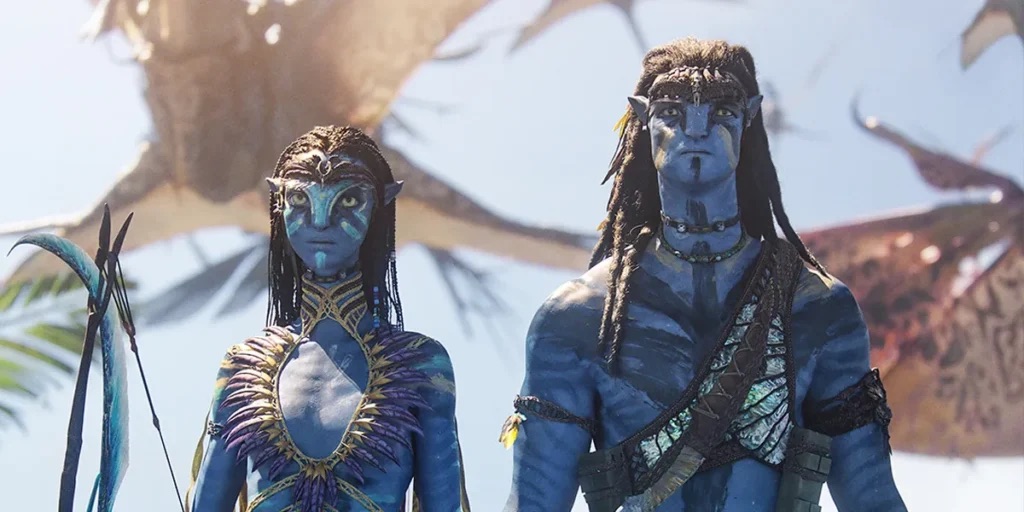
According to Reuters, a federal judge in Los Angeles has dismissed a copyright lawsuit against Disney and filmmaker James Cameron over the Avatar sequels Avatar: The Way of Water and Avatar: Fire and Ash. The case was filed by Eric Ryder, a 3-D animator, and U.S. District Judge George Wu issued the final ruling dismissing it on October 1.

Ryder filed the case in December 2025 and was seeking at least $500 million. He alleged that Disney and Cameron copied elements of a science fiction story he wrote called KRZ, which he said he wrote in 1999, and that he had worked with Cameron’s company, Lightstorm Entertainment, in the early 2000s on a possible movie based on it. His complaint pointed to similarities he saw between KRZ and the Avatar sequels, including anthropomorphic beings, a vast oceanic setting, an Earth-based corporation carrying out environmentally harmful mining on Europa, and an animal-based substance that extends life.
This was also not the first time Ryder had sued over Avatar. He filed a similar lawsuit in 2011, after the first film became a hit, which also centered on KRZ, and he lost that case in 2014.
Judge Wu ruled that KRZ and the Avatar sequels share some general features, but that they are not substantially similar in a way that would support a copyright claim. He found that many of the similarities were overstated, were expressed differently in the two works, or came down to broad ideas and familiar science fiction concepts, which copyright law does not protect. When he compared the plots, characters, dialogue, settings, moods, and themes, he did not find substantial similarity in the parts of the works that copyright actually covers.

That might sound like a technicality, but it is the heart of how copyright works, so here is the simple version. Copyright protects the specific way an author expresses an idea, not the idea itself. Lots of stories feature a big company taking resources from a faraway world, or a hero who switches sides. Those are building blocks, and no one gets to own them. What a person can protect is the particular words, characters, and details they build from those ideas. In this case, the judge decided that the two works did not share enough of the protected parts.
There was one more wrinkle. The court had actually dismissed Ryder’s claims once before, in July, but gave him another chance to amend his lawsuit under what is called an intermediate-copying theory. After the final ruling, the judge also declined to keep handling the remaining claims and dismissed them without prejudice, meaning they were not decided on their merits. Reports also noted that Cameron had a detailed treatment for the original Avatar by 1995, several years before his company received Ryder’s work. We have not seen anything saying whether Ryder plans to appeal, so we will keep an eye out.
If you have been to Disney’s Animal Kingdom, you already know why. Pandora, The World of Avatar, is built around this franchise, with attractions like Avatar Flight of Passage and the Na’vi River Journey, and the Avatar movies are a big part of why that land exists. Nothing in the reporting suggests this ruling affects the parks in any way. It is just a case where the franchise at the center of one of Disney’s most popular lands came out ahead in court, and it is worth knowing about if you care about where Pandora’s story comes from.

I try to keep my legal opinions to a minimum, because I am a theme park writer and not a lawyer, but I will say this. I am glad the ruling puts the line where it does. Stories share a lot of DNA, and if every familiar idea could be locked up in court, there would be a lot fewer movies and rides for the rest of us to enjoy. At the same time, I understand why a creator who feels something was taken from him would go to court, and I would never mock that. It takes real effort to take on a major studio, and the judge considered his claims twice. The result feels right to me, but I respect that this is exactly why we have a process.
For now, Pandora is not going anywhere, and I will happily keep enjoying it. If anything new develops in the case, we will let you know, so come hang out with us at Theme Park Scope and tell us in the comments which Pandora attraction is your favorite.


Leave a Reply