
There is a very specific kind of joy that comes from rounding a corner on Kilimanjaro Safaris and spotting an animal you were not expecting, and starting now…

…there is a brand-new reason to keep your eyes peeled on every single ride.
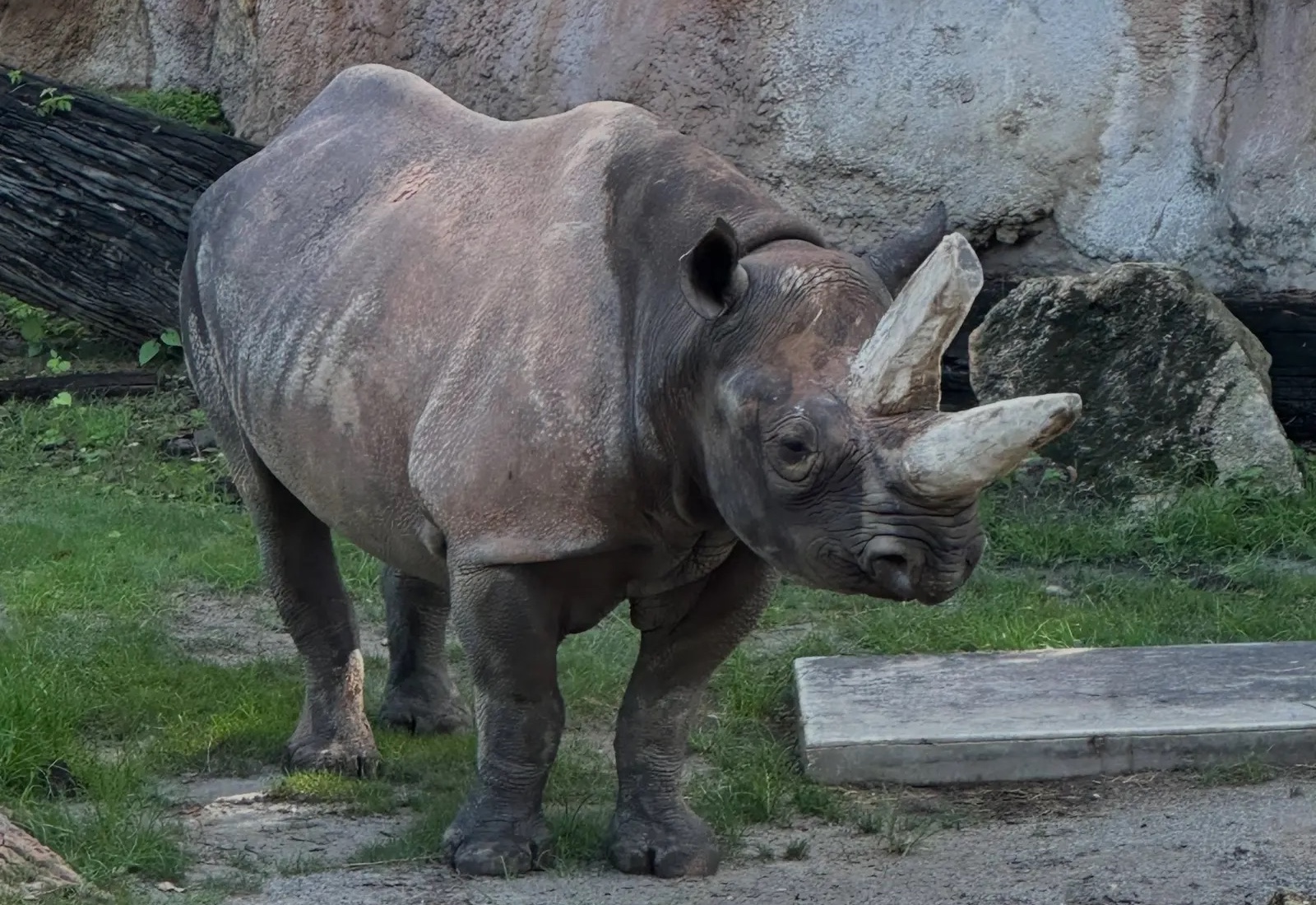
Disney’s Animal Kingdom has officially introduced Timu, a new eastern black rhino now exploring the savanna, with the news shared through Animals at Disney on Instagram. You can try to spot her during your next safari ride through Harambe, and honestly, given how much I already lose my mind over giraffes, I am not sure I am emotionally prepared for a rhino.
Here is the backstory, which turns out to be just as interesting as the animal herself. Timu previously lived at Racine Zoo in Wisconsin, and she came to Animal Kingdom as part of the Species Survival Plan run by the Association of Zoos and Aquariums. If that phrase sounds a little bureaucratic, here is what it actually means: accredited zoos work together to carefully manage breeding and placement for endangered species, matching animals across institutions to keep populations as genetically healthy and diverse as possible. So Timu moving from Wisconsin to Florida is not a random transfer, it is a deliberate move in a coordinated, nationwide effort to protect her species.

And that species really does need the help. Eastern black rhinos are one of the most endangered rhino subspecies on the planet, which means every addition to a carefully managed population genuinely matters. Disney’s Animal Kingdom has worked with rhinos for decades as part of its animal care and conservation efforts, and Timu is the latest rhino to join that work.
That history goes back further than many guests realize. According to Disney, two white rhinos born at the Walt Disney World Resort were sent to Africa back in 2006, to a region where that species had been extinct since 1982. A few years later, in 2011, a calf named Malaika was born in Uganda, the first rhino birth in that area in roughly thirty years. That is a pretty remarkable legacy for a theme park to be able to point to, and it puts Timu’s arrival in a much bigger context than just another animal to cross off your safari list.
Timu is also not the only new face at Animal Kingdom this year. The park’s animal family has been growing steadily, with new arrivals including Cinnamon, an Ankole calf, Ivy, a giraffe calf, and Bakari, the park’s newest western lowland gorilla, plus kangaroos that recently arrived at Conservation Station and an African painted dog that joined the park shortly before Timu. If it feels like there is a new baby or new arrival at Animal Kingdom every few months, that is because there genuinely is, and it is one of the best reasons to keep returning to this park, even if you think you have already seen everything.

So what does Timu’s day-to-day life actually look like? Disney designs its rhino habitats with hills, tall grasses, trees, rocks, and shrubs, giving the animals plenty of space to explore. Keepers also create mud wallows, which give the rhinos a place to cool off, protect their skin from the sun, and help remove parasites. Black rhinos can also receive treats like sweet potatoes and carrots while voluntarily taking part in examinations, vaccinations, and even blood draws, which is a pretty impressive example of how much trust goes into modern animal care.
If you are planning a visit, you can spot both black and white rhinos from Kilimanjaro Safaris, and rhinos are part of the experience on the Wild Africa Trek as well. A small tip from someone who has been on this ride more times than I would like to admit: sit toward the outside of the vehicle if you can and keep scanning the horizon even when it looks like nothing is happening, because the best animal sightings are almost always the ones you nearly missed.

Welcome to Animal Kingdom, Timu. We cannot wait to see you.
We will keep sharing news about new arrivals and conservation efforts at Animal Kingdom, so check back with Theme Park Scope before your next safari.


Leave a Reply