

Disney had Mickey Mouse, beloved stories, and some of the most recognizable characters in entertainment, but according to one former CEO, that still wasn’t enough to make the company successful at creating video games.
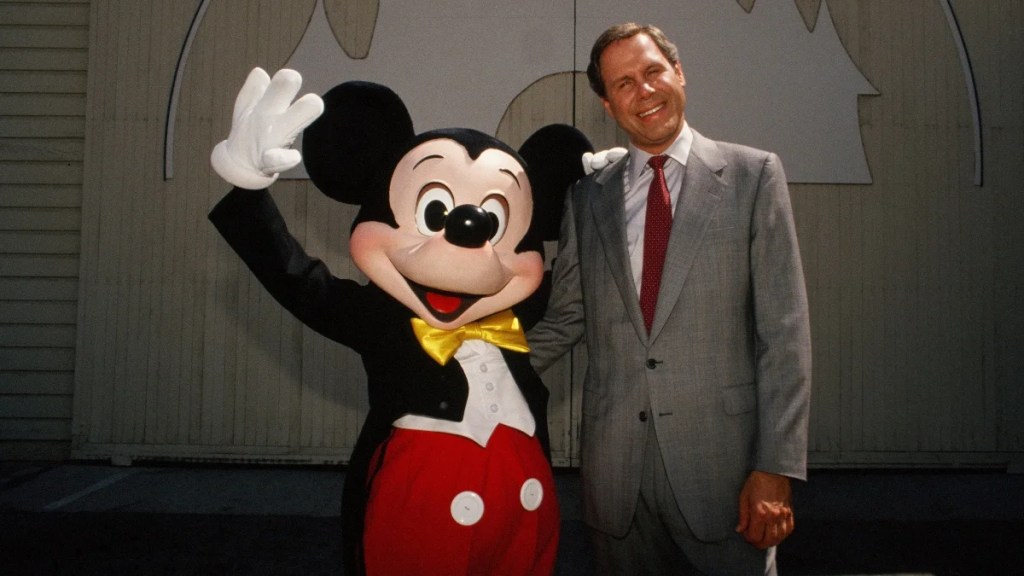
Disney’s relationship with the video game industry has produced everything from Kingdom Hearts and Disney Infinity to Disney Dreamlight Valley, Marvel Rivals, and countless Star Wars adventures. However, former Disney Chairman and CEO Michael Eisner recently acknowledged that the company’s earliest attempts to succeed in gaming did not exactly go according to plan.
During a July 16, 2026, Paley Center for Media panel in New York City titled “Sports in the Gaming Era,” Eisner spoke candidly about the challenges Disney and other major Hollywood companies faced when they first attempted to enter the video game business. He appeared on the panel alongside Delphi Interactive founder and CEO Casper Daugaard and OpenAI senior advisor Moritz Baier-Lentz.
And Eisner did not try to sugarcoat the results.
Michael Eisner Says Disney “Failed” at Early Video Game Development
The panel focused on the increasing value of established intellectual property in gaming, including Delphi Interactive’s work involving the James Bond and FIFA brands.

While discussing the entertainment industry’s complicated history with video games, Eisner admitted that Disney and other Hollywood companies struggled to develop successful games internally.
“We all failed,” Eisner said. “We ended up licensing. That’s how we succeeded.”
According to Eisner, Disney’s problem was not a shortage of recognizable characters, established stories, or popular entertainment franchises. Instead, traditional media companies lacked the specialized technical expertise required to develop games during the industry’s early years.
Gaming was initially an extremely technology-driven medium, and that was not an area in which Hollywood studios were particularly experienced.
Eisner pointed to Warner Communications’ experience with Atari as one early example. Warner acquired Atari during the company’s rapid rise but later sold the struggling video game business in 1984 following substantial financial losses. Nintendo then helped rebuild consumer confidence in home consoles with the North American launch of the Nintendo Entertainment System and Super Mario Bros. in 1985.

“It was so technologically driven in the beginning, which was not the strong suit of any of us,” Eisner explained. “Now it’s story-driven. Now it is IP-driven.”
In other words, Disney had many of the ingredients that would eventually become essential to blockbuster video games (compelling characters, memorable worlds, and decades of storytelling), but the company did not initially have the technical infrastructure or development experience to turn those properties into consistently successful games.
Licensing Became Disney’s Winning Strategy
Rather than continuing to build every game internally, Disney increasingly licensed its characters and entertainment properties to established video game developers.
That strategy allowed experienced studios to manage the technology, gameplay systems, and production process while Disney supplied the recognizable characters, stories, and worlds.

One of the most notable early examples was Kingdom Hearts, the role-playing game franchise developed by Square Enix that brings Disney characters and destinations together with original characters and elements associated with the Final Fantasy series.
The original Kingdom Hearts was released for PlayStation 2 in 2002 while Eisner was still leading The Walt Disney Company. The unconventional crossover reportedly required Eisner’s approval during a visit to Tokyo, although the former CEO has since acknowledged that he remembers very little about approving the project.
When reminded that Kingdom Hearts was the project combining Final Fantasy concepts with Disney characters, Eisner reportedly responded, “Oh, I remember now.” However, when he was asked why he approved the original game, he answered, “I don’t.”

Considering that Kingdom Hearts has grown into a long-running franchise spanning more than two decades, that forgotten approval turned out to be a fairly important one.
Disney’s Video Game Business Has Changed Several Times
Disney’s first major internal push into video games began with Walt Disney Computer Software in 1988. The company later established Disney Interactive as a game-publishing division in 1994. That operation eventually evolved into what is now known as Disney Electronic Content.
The division has managed both licensing arrangements and game development partnerships involving third-party studios.
Over the years, those efforts have produced a wide range of Disney games, including the Kingdom Hearts franchise, the toys-to-life series Disney Infinity, and the continually expanding life-simulation adventure game Disney Dreamlight Valley.
However, Disney’s internal console gaming strategy underwent another major change after the cancellation of Disney Infinity in 2016.
Following the franchise’s cancellation, Disney closed its self-publishing console game operation and returned to a business model that relied heavily on licensing its properties to outside developers. Companies including Square Enix, Electronic Arts, Ubisoft, Sony, and Gameloft have since worked on games involving Disney, Pixar, Marvel, and Star Wars characters and worlds.

That decision reflected the same lesson Eisner discussed during the Paley Center panel: Disney’s most effective role may not always be building the technology itself.
Instead, the company can provide its massive collection of intellectual property while developers with extensive gaming experience handle production and game design.
Disney’s Current Video Game Partnerships
Disney’s modern gaming catalog demonstrates how extensively the company has embraced outside development partnerships.
Recent Disney-related releases and collaborations highlighted in the report include:
- Gameloft’s Disney Dreamlight Valley
- Dlala Studios’ Disney Illusion Island
- Bithell Games’ TRON: Catalyst
- Netmarble’s Game of Thrones: Kingsroad
- Marvel Rivals
- Marvel Cosmic Invasion
- Ubisoft’s Star Wars Outlaws: A Pirate’s Fortune
- Disney character and franchise crossovers in Fortnite
The upcoming slate of games based on Disney-owned properties also includes:
- Insomniac Games’ Marvel’s Wolverine
- Bit Reactor’s turn-based strategy game Star Wars Zero Company
- Fuse Games’ Star Wars: Galactic Racer
Although these projects vary widely in genre, platform, and style, they all reflect Disney’s licensing-centered approach. Disney supplies established franchises and globally recognizable characters, while specialized studios oversee the technology and gameplay development.
Disney’s Early Failure Ultimately Shaped Its Current Success
Eisner’s comments offer a rare and refreshingly direct look at a period when entertainment companies were still trying to understand the rapidly changing video game industry.
Disney may have initially struggled to translate its famous characters into interactive entertainment, but those failures helped the company recognize where its real strengths were.

Instead of attempting to master every aspect of game development internally, Disney learned to pair its storytelling power with developers who already understood the technology.
That approach helped produce franchises such as Kingdom Hearts and continues to shape Disney’s involvement in modern games featuring Disney, Pixar, Marvel, and Star Wars properties.
And honestly, considering the increasingly complicated storyline of Kingdom Hearts, it may be fitting that even the executive who approved it cannot fully explain how it happened.
What is your favorite video game based on a Disney property? Are you loyal to Kingdom Hearts, still mourning Disney Infinity, or currently spending all of your free time decorating your valley in Disney Dreamlight Valley?
Be sure to revisit Theme Park Scope for more Disney news, entertainment updates, video game announcements, theme park developments, and everything happening across the worlds of Disney and beyond.



Leave a Reply